Genuine Leather or Faux Leather Bar Stools?
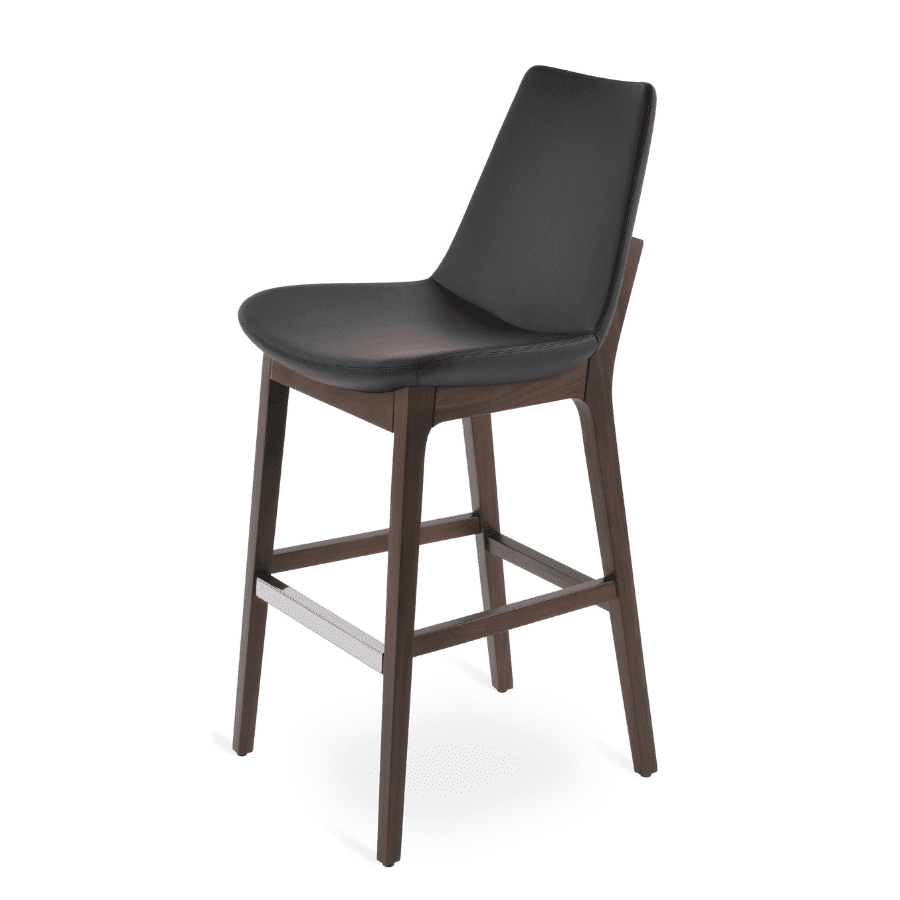
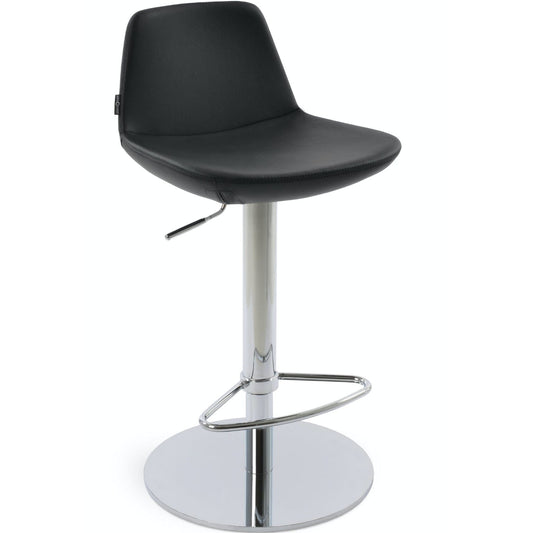
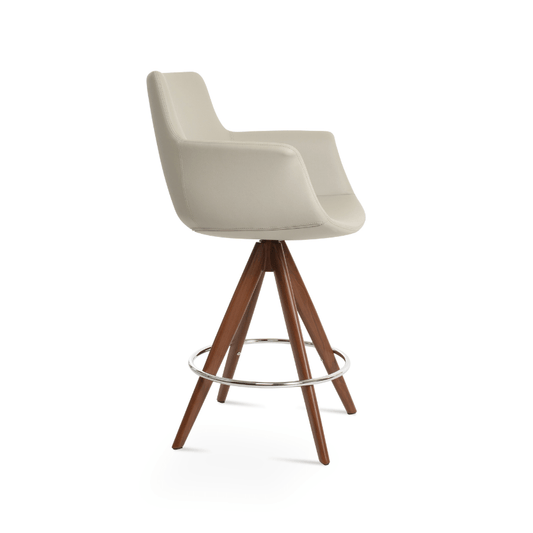
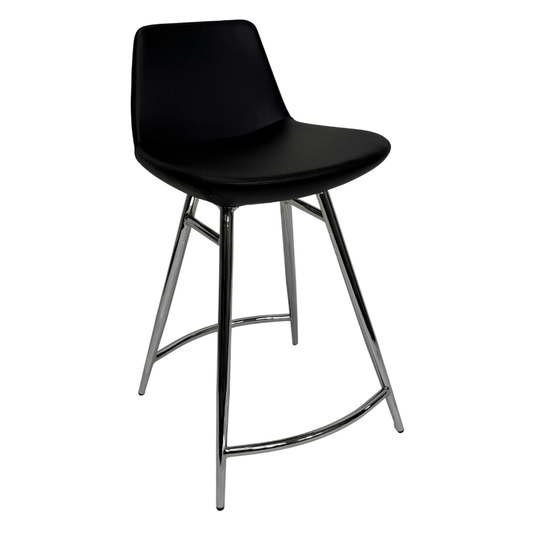
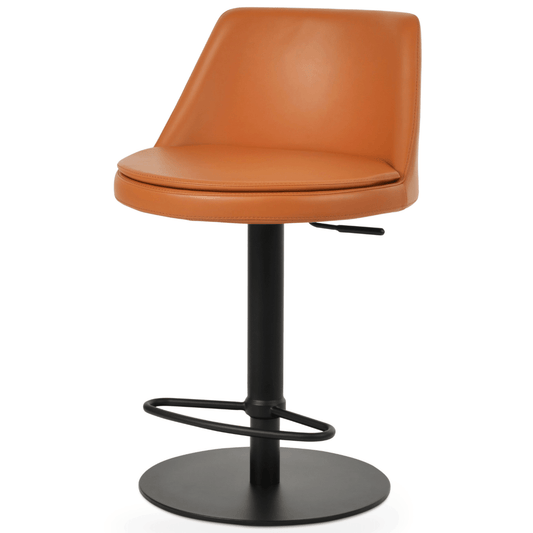
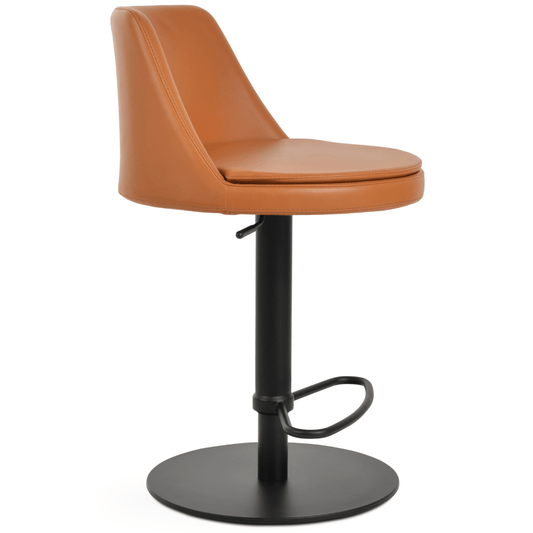
Most leather bar stools at Your Bar Stools Canada are upholstered in PPM, a polyester microfibre faux leather that resists spills and scuffs and wipes clean with a damp cloth. Seven stools use real genuine leather: the Gazel in Italian genuine caramel leather (Ana, MW and Swivel bases), the Eiffel Wood and Eiffel MW in black genuine leather, the Harput in brown genuine leather, and the Pera Adjustable in black genuine leather. The Gazel, Eiffel Wood and Eiffel MW come in counter height, with a 23 to 25.5 inch seat, or bar height, with a 29 to 29.5 inch seat. The Harput and Pera Adjustable have gas-lift seats that adjust from about 22 to 32 inches, so one stool fits both a counter and a bar. See all of them in genuine leather bar stools.
Genuine leather softens and develops a patina with use and needs an occasional leather conditioner. PPM faux leather keeps its finish, costs less, and is the better choice for busy family kitchens and commercial use.
Leather Counter Stools
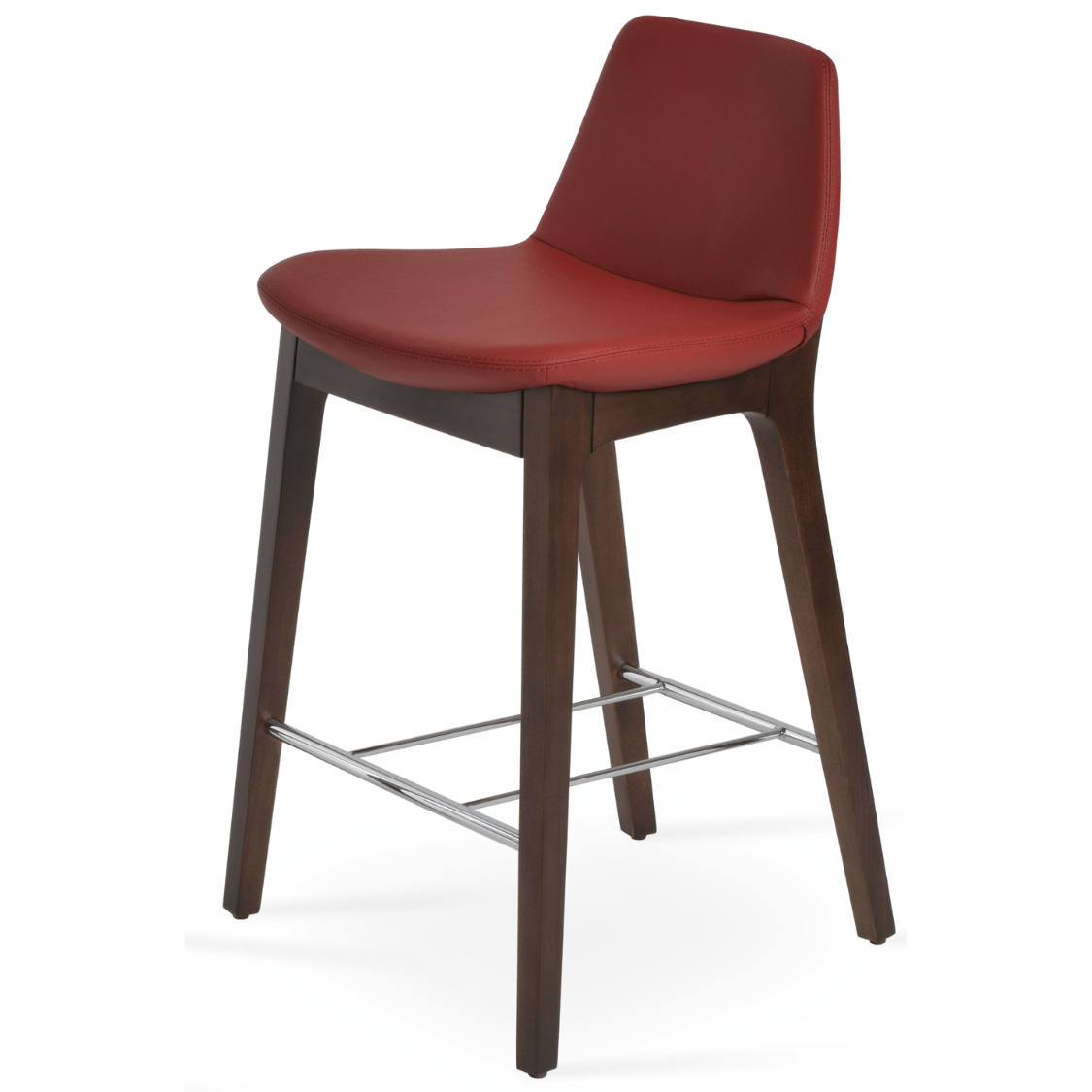
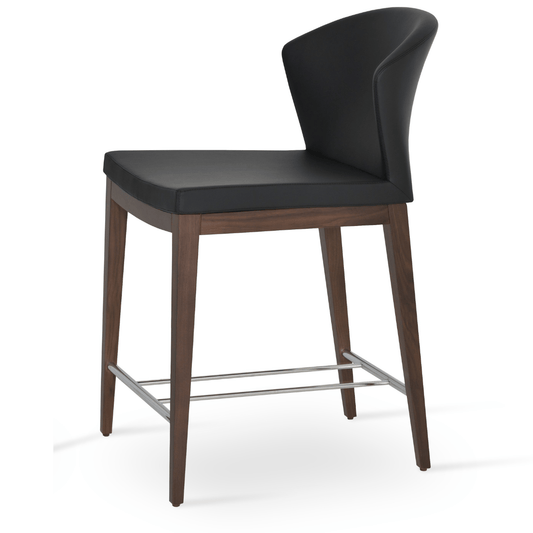
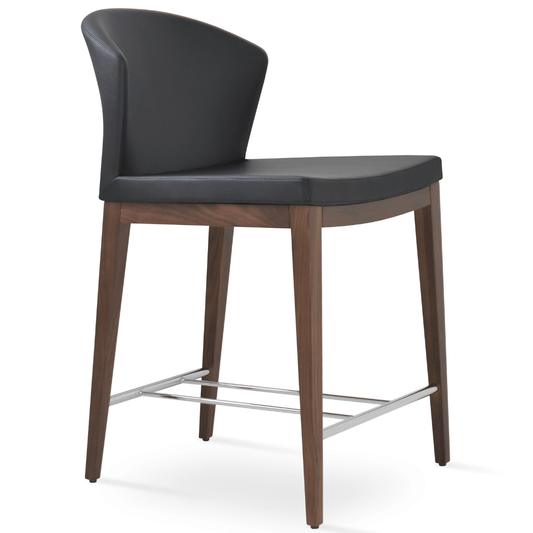
A leather counter stool has a 24 to 27 inch seat for a 35 to 37 inch kitchen island, the height most Canadian kitchens need. For a family kitchen, choose PPM faux leather: it wipes clean with a damp cloth and resists spills and scuffs. A back and a footrest make longer meals comfortable; see bar stools with backs.
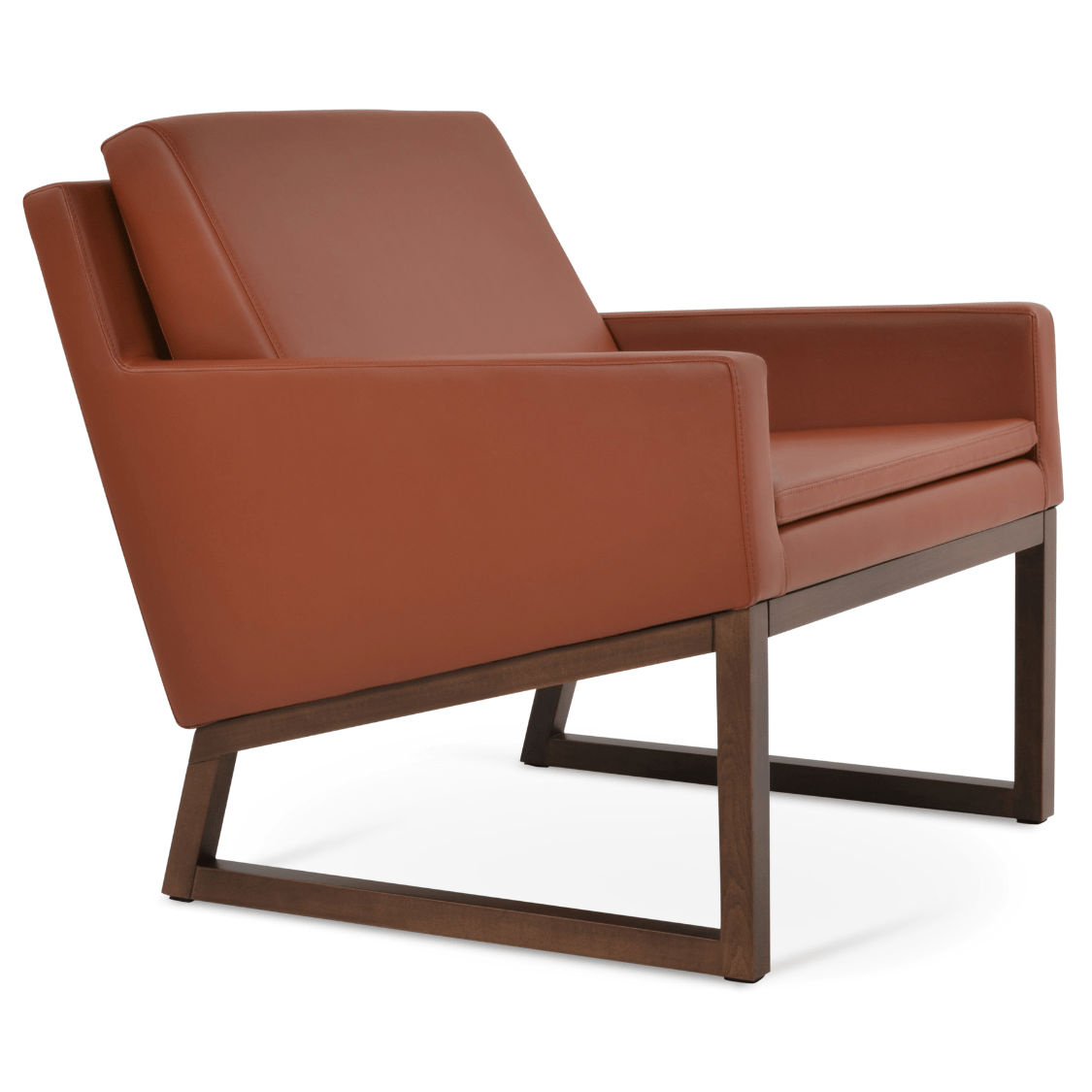
Brown Leather Bar Stools
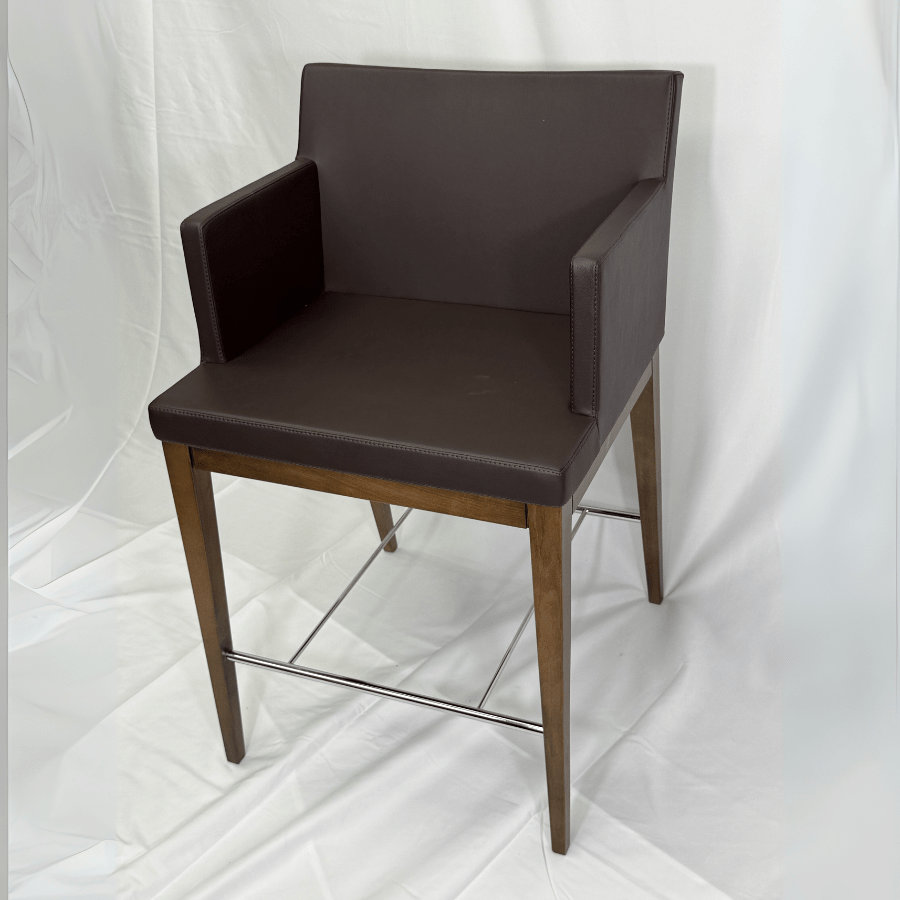
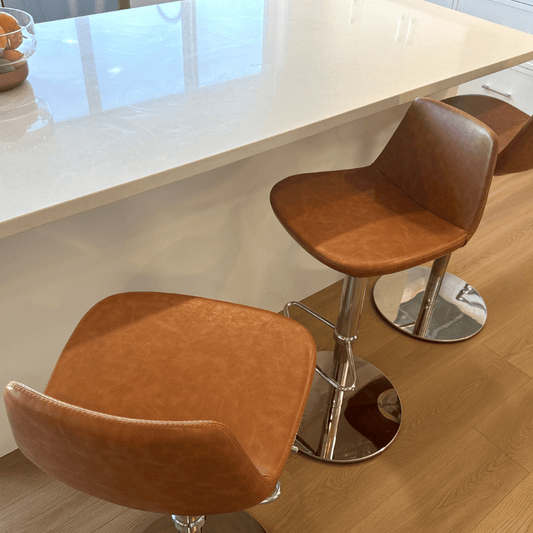
Brown leather bar stools, in tones such as caramel, cinnamon and brick, pair well with walnut and oak cabinets and warm a white or grey kitchen. A walnut-finish base matches wood floors; a black or chrome base gives a more modern look.
Why leather stools suit a kitchen island
Leather bar stools bring together comfort, durability and a more finished look, which is why they remain one of the most popular seating choices for kitchen islands, breakfast bars and home entertaining spaces. Compared with a bare timber or metal seat, leather feels warmer, gives slightly under weight, and reads as furniture rather than as utility seating.
The practical argument is just as strong as the visual one. Leather and faux leather wipe clean in seconds, which matters more at an island than anywhere else in a home — a kitchen island collects airborne cooking residue as well as direct spills, and that residue is what dulls a woven fabric over a year or two even when nothing is ever spilled on it.
Leather is also unusually versatile in style. The same material reads sleek and modern on a slim chrome frame, warm and classic on turned timber, and industrial on blackened steel. That flexibility is why it works from a compact condo kitchen through to a large island or a dedicated home bar.
Genuine leather, faux leather and leather-look
Not all leather stools offer the same material experience, and the difference is worth understanding before you choose.
Genuine leather has natural grain variation, softens with use, and develops a patina over years rather than wearing out. It is the choice where the stools are part of the room's character — a home bar, a formal counter, a design-led kitchen. It costs more and it asks for occasional conditioning.
Faux leather is easier to maintain, more consistent in colour across a set, available in a far wider range of finishes, and considerably more forgiving in a household with young children. A good faux leather holds its surface for years of daily wiping; it will not develop character, but it will not mark either.
For most family kitchens, faux leather is the better buy and we say so plainly. For a home bar or a counter that is used socially rather than functionally, genuine leather earns its price. Both work well when the stool underneath is properly built — the upholstery is only as good as the frame carrying it.
Getting the height right
Height is the single most important thing to get right, and it is where most wrong orders happen. Measure from the floor to the underside of your counter, not to the top surface, then subtract 10 to 12 inches. That gap is what gives comfortable legroom.
A standard 35 to 37 inch kitchen counter or island takes a counter height stool with a 24 to 27 inch seat. A 41 to 43 inch home bar or pub table takes a bar height stool with a 29 to 32 inch seat. A raised ledge of 45 to 47 inches needs a spectator stool with a 33 to 36 inch seat.
Counter height is by far the more common of the two in Canadian homes, because it matches standard kitchen cabinetry. Do not go by the name of the surface — a "breakfast bar" built flush with the kitchen counter is counter height, not bar height, and that mislabelling is behind most wrong-height orders in this category. Full measurements for every height class are in our bar stool height guide.
Leather stools at a kitchen island
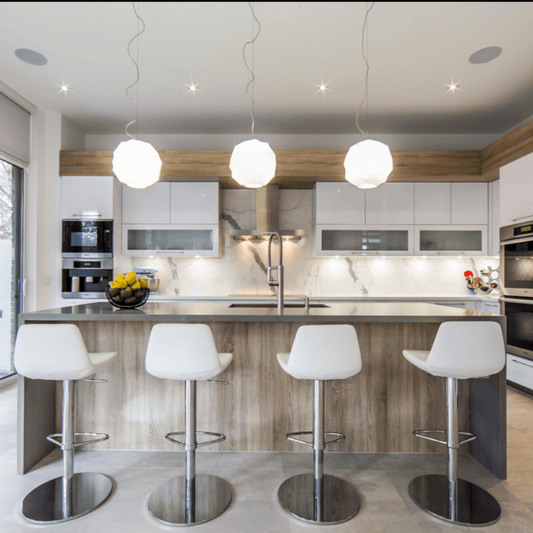
Kitchen islands are the most common place for these stools because an island is used for far more than dining — breakfast, coffee, homework, conversation, casual entertaining. Upholstered seating makes that range of uses comfortable in a way a hard seat does not.
Seat width and visual weight matter as much as height. A leather stool on a slim frame keeps an open-plan layout feeling light. A fuller upholstered stool anchors a large island and makes it read as a furniture piece rather than a counter with seats at it. In a compact kitchen the slimmer profile is almost always the right call; on an 8 foot island the fuller stool stops the room looking under-furnished.
Allow 26 to 30 inches of counter width per stool, measured centre to centre. A 6 foot island comfortably seats three; an 8 foot island seats four. Keep at least 10 inches of counter overhang for knees, and 15 inches if people will eat full meals at the island. Browse the island-specific range at kitchen bar stools.
Backs, arms and swivels
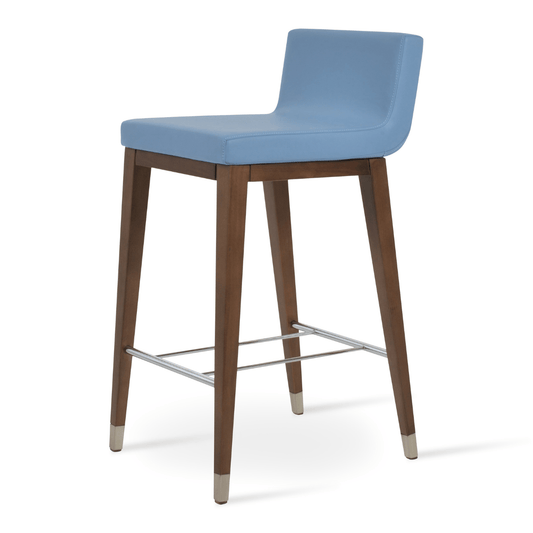
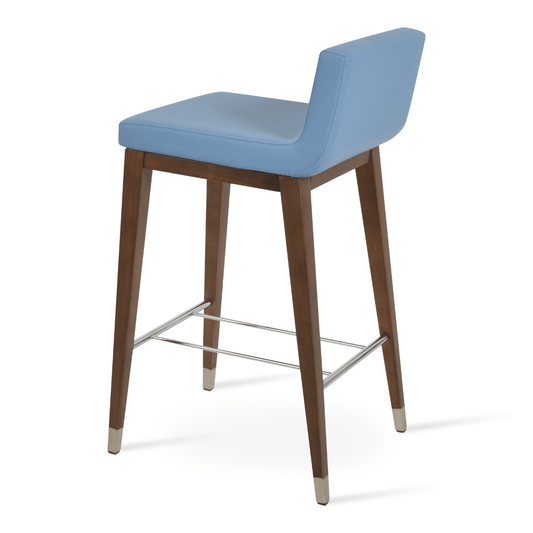
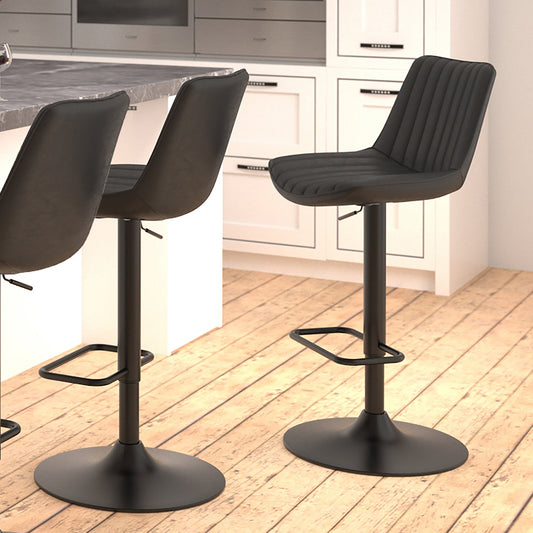
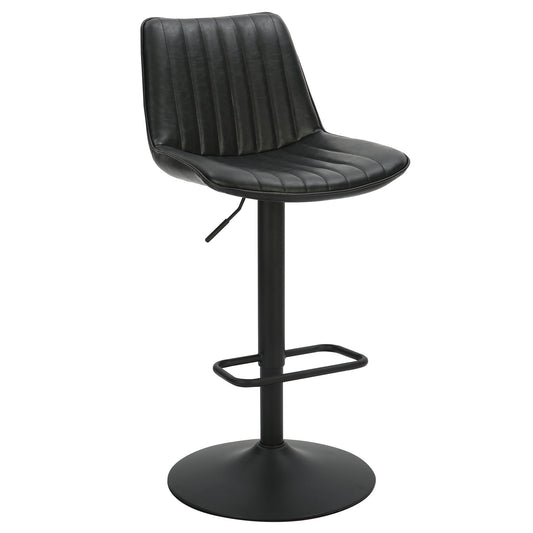
Back style changes both comfort and appearance. A leather stool with a back is measurably more comfortable over a full meal, because the lower back has something to rest against — choose it where the island is where the family eats. A low back supports the lumbar region while keeping sightlines clear across an open-plan room, which is the balance most kitchens actually want.
A backless leather stool tucks fully under the overhang and suits a tight kitchen or a counter used in passing.
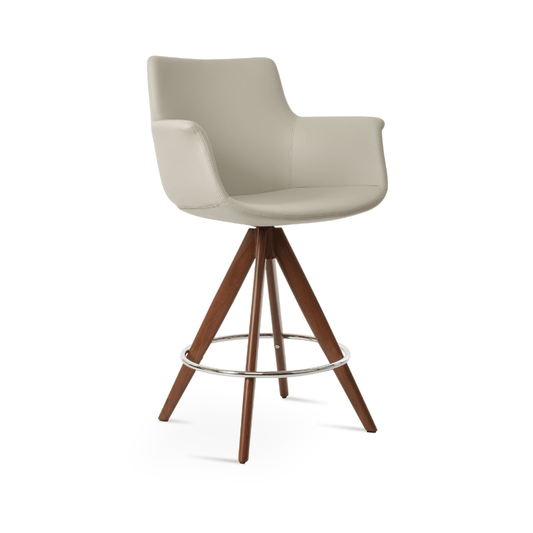
Stools with arms add support and presence, but they need the wider end of the spacing range and they will not tuck as far under a counter. Plan on 30 inches per stool if you want arms.
Leather swivel bar stools are the combination we recommend most often for islands facing a living space: the upholstery handles the long sitting, the swivel handles getting in and out. Where one counter is shared by adults and children, adjustable stools add a gas lift so the height changes as well as the direction.
Colours and how they behave
Colour has more impact on a leather stool than on any other material, because the surface is uninterrupted.
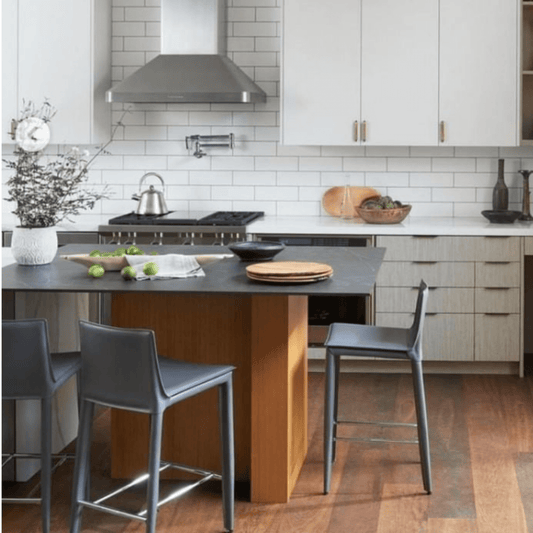
Brown is the classic choice and the one that most reliably warms a kitchen. It works particularly well against timber flooring, butcher block and natural stone, and it hides everyday marks better than any other leather tone. Cognac, tan and camel sit in the same warm family and read softer and more contemporary than a dark chocolate brown.
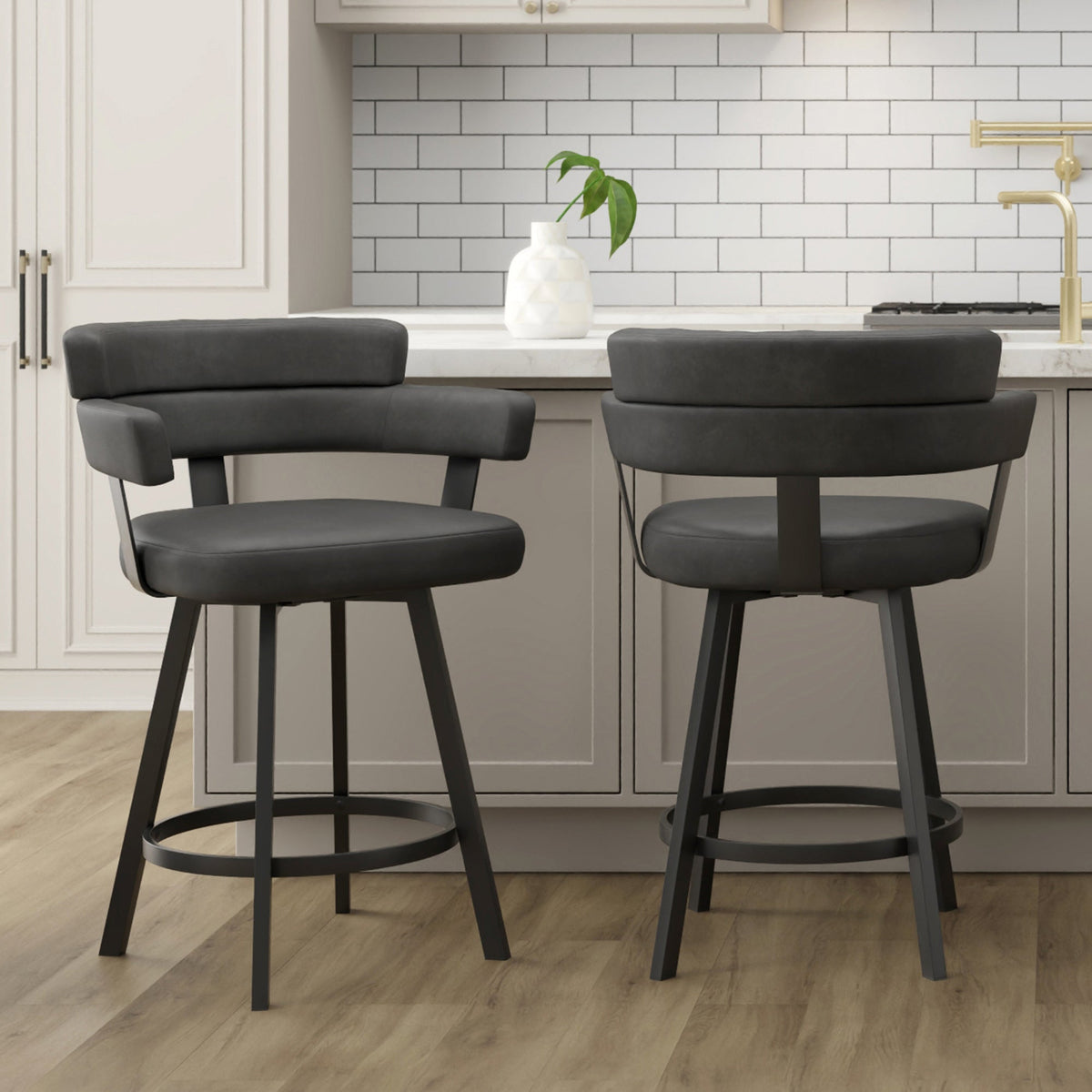
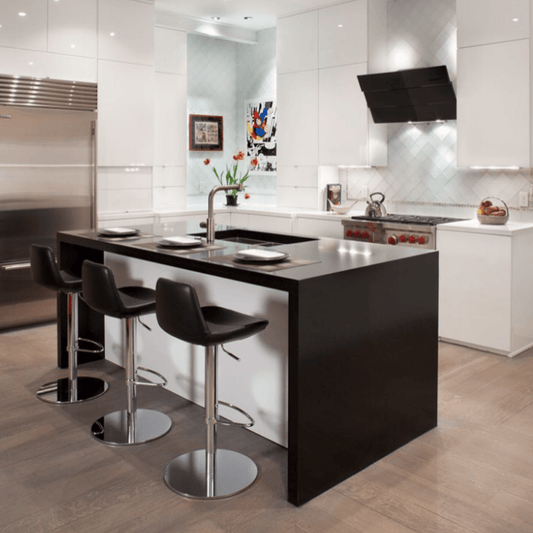
Black is cleaner and more modern, and it links to the black fixtures and hardware most Canadian kitchens now have somewhere. It is the sharpest option against pale cabinetry — see also black counter stools.
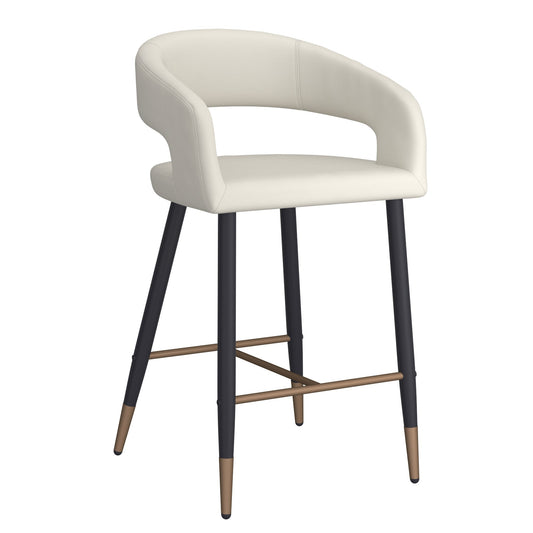
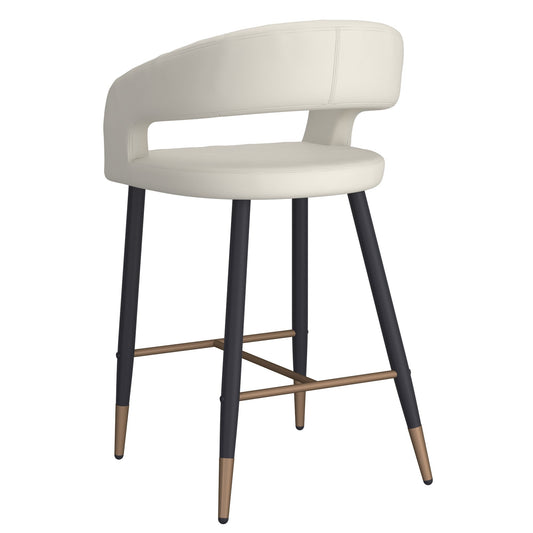
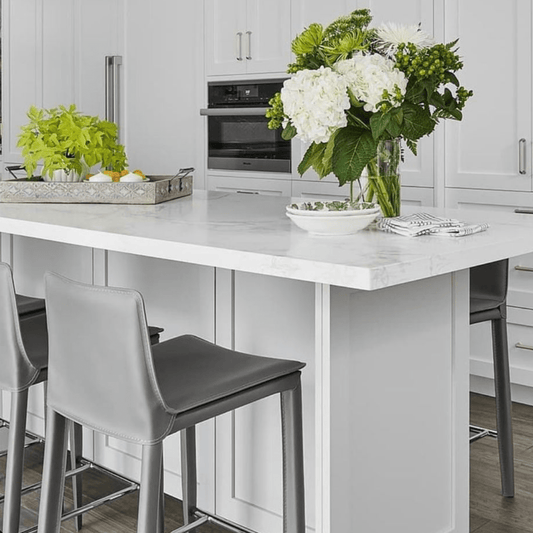
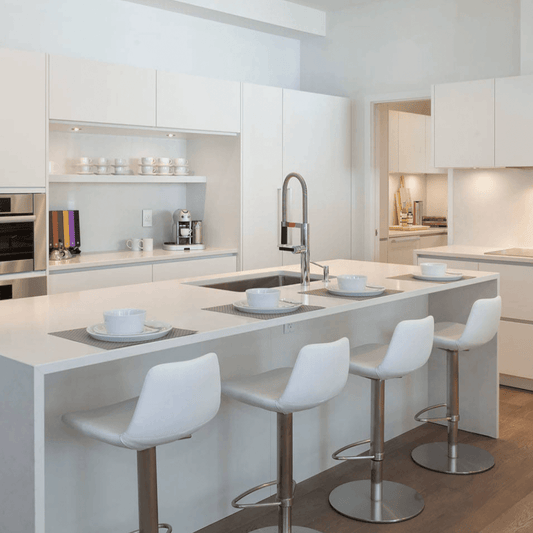
White and cream brighten a room and look excellent in a bright, restrained kitchen, though they ask for more upkeep than brown. Compare against white bar stools. Grey sits between black and white and is the most forgiving neutral — see grey bar stools.
If the kitchen already carries three finishes — cabinetry, counter and hardware — pick a leather tone that echoes one of them rather than introducing a fourth.
Comfort, frames and everyday use
A leather stool has to feel good as well as look good. Seat shape, padding depth, back support, footrest position and overall stability all decide whether the stools get used or just looked at.
The frame determines how long the stool lasts. Metal frames give the most stability under daily use. Solid wood frames with dowelled or mortise-and-tenon joints stay rigid for years, while stapled frames loosen and cannot be brought back — worth checking at any price point. Timber-framed leather stools are at wooden bar stools.
The footrest is not a detail. At counter and bar height the feet do not reach the floor, so the footrest takes the strain off the lower back during a long sitting and keeps shoes off the cabinet fronts, which is where wear shows first on an island. Every stool in this collection has one.
Looking after leather
Wipe faux leather with a damp cloth and dry immediately. Do not use bleach, solvent cleaners or anything containing ammonia — they strip the topcoat, and on pale faux leather that is what causes the yellowing people wrongly blame on age.
Genuine leather wants a soft dry cloth for routine cleaning and a leather conditioner once or twice a year to stop it drying out. Keep both away from direct heat and prolonged direct sunlight, which fades and hardens leather faster than use does.
Treat spills immediately on either material. Once a year, tighten the fixings on the footrest and the seat plate — that is where daily use concentrates, and it is the fixing rather than the frame that fails first.
Buying with confidence
Leather tone is difficult to judge from a screen, because screens shift browns and tans unpredictably. Send us a photo of your kitchen and we will show the stool in your space before you order, free, with our See It in Your Space service.
Shipping is free across Canada. If you are furnishing a restaurant, bar or hotel, our trade programme offers project pricing on orders of 12 units or more, with freight quoted separately and priority stock allocation on repeat lines. For contract-rated seating, see commercial bar stools.
Leather stools by type and finish
Leather stools divide by what the upholstery actually is. Genuine leather bar stools have natural grain variation and soften over years of use, while faux leather holds a consistent colour across a set and wipes clean more easily — see faux leather seating for that range. Brown leather bar stools are the warmest option and the most forgiving of daily marks, which is why they remain the most popular finish we sell.
By height and mechanism, leather counter stools have 24 to 27 inch seats for 35 to 37 inch counters, and leather swivel bar stools add rotation for islands that face a living space. For a different material entirely, compare wooden bar stools and rattan bar stools.
Other ways to browse our stools
If you are still deciding, it usually helps to fix the height first: a 35 to 37 inch counter takes a counter height stool at 24 to 27 inches, and a 41 to 43 inch bar takes a bar height stool at 29 to 32 inches. From there, choose by how long people sit — stools with backs for meals, backless stools for a tight kitchen, swivel stools for an island that faces a living space.
Our full range is also grouped by material and style. See leather, wooden and rattan bar stools, or browse mid century and industrial designs. Every stool we sell is listed under bar stools Canada, with free shipping across the country.
Leather Bar and Counter Stools
Leather bar stools bring together comfort, durability, and a more finished look, which is why they remain one of the most popular seating choices for kitchen islands, breakfast bars, and home entertaining spaces. Compared with harder seating surfaces, leather and leather-look upholstery can make a stool feel warmer, more supportive, and more refined. Whether the goal is a modern kitchen, a more classic dining area, or a welcoming home bar, leather bar stools offer a balance of practicality and style that works across many interiors.
Why Leather Bar Stools Are So Popular
One of the biggest reasons shoppers choose leather bar stools is the combination of easy maintenance and visual appeal. Leather and faux leather surfaces are often simpler to wipe clean than many fabric options, which makes them a practical choice for kitchens and other everyday-use areas. At the same time, they add softness and texture in a way that feels more elevated than many all-wood or all-metal stools. For homes that want seating to look polished but still handle daily use, leather stools are often a strong fit.
Leather bar stools are also versatile in style. They can feel sleek and modern, warm and classic, industrial, mid-century, or transitional depending on the frame, colour, and silhouette. That flexibility allows them to work in a wide range of spaces, from compact condo kitchens to larger islands and dedicated home bar areas.
Leather, Faux Leather, and Genuine Leather Options
Not all leather bar stools offer the same material experience, so it helps to understand the difference between the main options. Genuine leather bar stools are often chosen for their natural texture, character, and ability to develop a softer patina over time. Faux leather and leather-look stools are popular because they are usually easier to maintain, more budget-friendly, and available in a wider range of finishes and colours.
For many shoppers, the best choice comes down to lifestyle and priorities. If natural material, texture, and long-term character matter most, genuine leather may be the stronger option. If easy upkeep, visual consistency, and everyday practicality are the main goals, faux leather can be an excellent fit. Both can work well when the stool is well made and suited to the space.
Choosing the Right Height
Height is one of the most important things to get right when shopping for leather bar stools. Counter height stools are usually the best fit for standard kitchen counters and islands, while bar height stools are designed for taller bar surfaces. A simple guide is to leave about 10 to 12 inches between the seat and the underside of the counter or bar for comfortable legroom.
For counters around 34 to 36 inches high, seat heights of about 24 to 27 inches usually work best. For taller bar surfaces around 40 to 42 inches high, seat heights of about 28 to 32 inches are generally the right fit. Getting the height right matters just as much as choosing the right look, because even a beautiful stool will not feel comfortable if the proportions are off. Kitchen islands are one of the most common places to use kitchen bar stools because they are often used for much more than dining. They may serve as a place for breakfast, coffee, homework, conversation, or casual entertaining.
Leather Bar Stools with Backs, Arms, or Swivel Features
Back style changes both comfort and appearance. Leather bar stools with high backs usually feel more supportive and are often preferred for longer meals, entertaining, or homes where stools are used regularly. Low-back stools can strike a balance between support and a lighter silhouette, while fuller backs create a more substantial, dining-like presence.
Some shoppers also prefer stools with arms for additional support, though these usually need more room between seats. Leather swivel bar stools are another popular option, especially for kitchen islands and social spaces where people often turn between the counter and the rest of the room. Swivel designs combine the comfort of upholstered seating with easier movement, making them especially useful in open-plan homes.
Popular Colours and Finishes
Colour has a strong impact on how leather bar stools feel in a room. Brown leather bar stools are popular because they add warmth, richness, and a more classic or rustic character. They work especially well with wood tones, natural materials, and kitchens that need a warmer visual balance. Black leather bar stools tend to feel cleaner and more modern, often pairing well with black accents, metal frames, and sharper contemporary spaces.
Tan, cognac, camel, and other warmer leather tones can help a kitchen feel softer and more inviting. White or light-toned leather stools can brighten a room, though many shoppers choose them more for style impact than for everyday practicality. The best colour usually depends on the existing finishes in the kitchen, the amount of contrast you want, and how formal or relaxed you want the seating to feel.
Comfort and Everyday Use
A leather stool should not only look good in the room but also feel good in daily life, and for some spaces adjustable bar stools add extra flexibility for different users and activities. Seat shape, padding, back support, footrest design, and overall stability all matter. A well-cushioned seat and supportive back can make a noticeable difference when stools are used often, while a sturdy footrest helps improve posture and comfort during longer sitting periods.
Finding the Right Leather Stool for Your Space
The best leather bar stool depends on a combination of height, material, comfort, and style, whether you are looking at a broader range of leather bar stools in Canada or more compact leather counter stools. Some shoppers want a clean modern stool with black leather and a slim metal frame. Others prefer a warmer brown leather stool with wood accents and a more classic look. Some need swivel functionality, while others want a simple fixed stool that tucks neatly under the counter.